We build the stations that build the cells.
Cell assembly is our focus today, on process stations we design and build ourselves. Electrode production follows, starting in our own research lab.
Cell assembly is our focus today, on process stations we design and build ourselves. Electrode production follows, starting in our own research lab.
Material moves one way round the line. Cell assembly is our focus today; electrode production follows, starting with research and lab-scale electrodes.
We start with in-house research and lab-scale electrodes, then scale as cell assembly matures.
Planetary mixer
Active material, conductive additive and binder are mixed into an even slurry.
Slot-die coater
The slurry is spread in a thin, even layer onto aluminium (cathode) or copper (anode) foil.
Drying oven
The solvent is driven off so only the dry coating stays on the foil.
Calender rollers
Rollers press the coating to the target thickness and density.
Slitter
Wide coated rolls are cut into narrower strips for the cell size.
Vacuum oven
Remaining moisture is removed before the electrodes enter the dry room.
Our focus today: turning electrode sheets into sealed cells, with stations we build ourselves.
Notching and cutting station
Electrode sheets are cut to size with their uncoated tab flags.
Stacking station
Cathode, separator and anode are stacked layer by layer, precisely aligned.
Ultrasonic welder
The foil flags are gathered and welded to each cell tab, and every weld is checked.
Pouch forming and sealing
The stack goes into a formed pouch, which is sealed on three sides.
Filling station
Electrolyte is dosed into the open side and wets the stack under vacuum.
Vacuum sealer
The last side is sealed, closing the cell.
Every cell is formed, measured and traced by its barcode on our own test channels.
Cell cycler
The first controlled charges build the protective layer on the anode.
Degassing and final sealing
Gas from formation is removed and the cell is given its final seal.
Ageing racks
Cells rest and are checked for self-discharge.
Test channels
Each cell is measured, graded and linked to its data by its barcode.
The same cell as on our homepage, rebuilt in the order we assemble it.
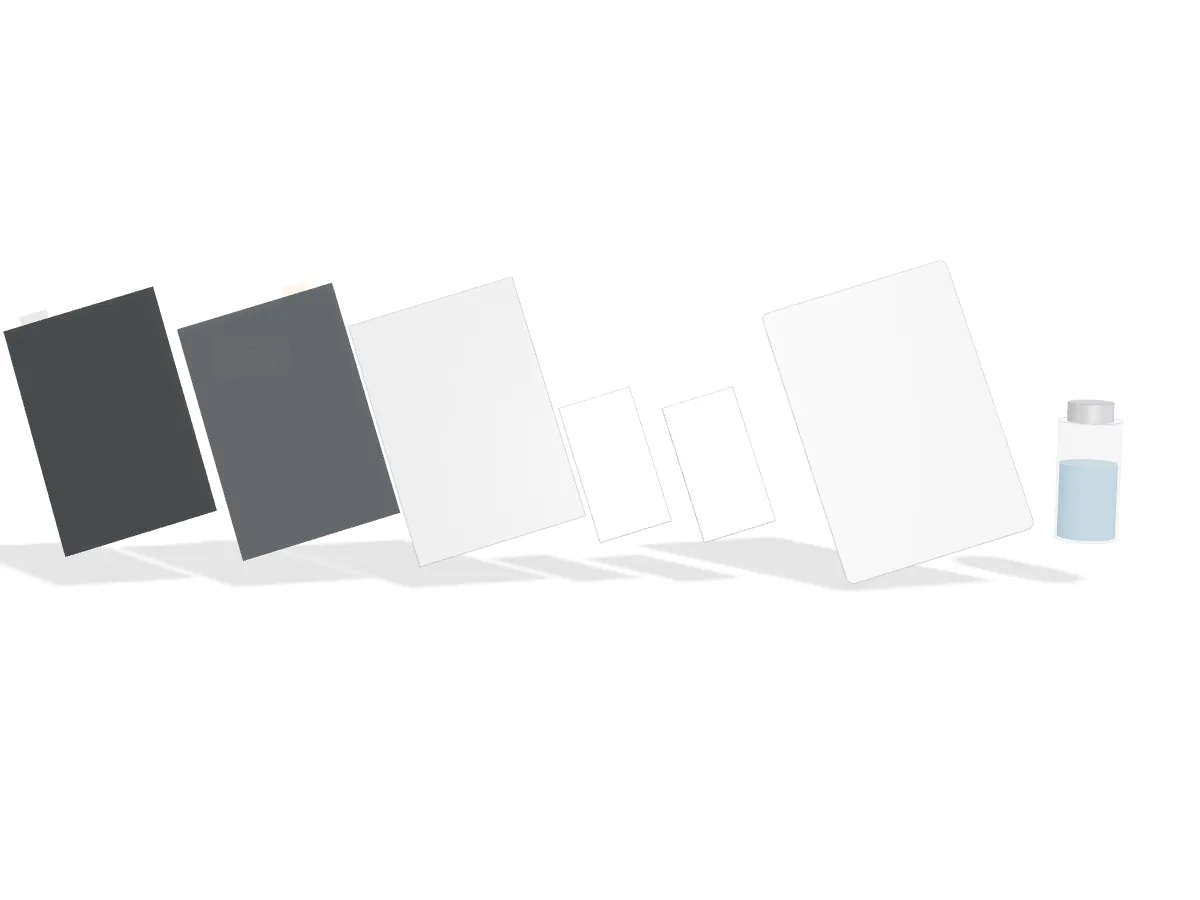
Coated electrodes, separator, tabs, pouch film and electrolyte.
Cathode and anode sheets with their tab flags. The anode is slightly larger, so it overhangs the cathode on every edge.
Cathode, separator, anode, separator, aligned sheet by sheet.
The foil flags are gathered and welded to each cell tab. Every weld is resistance-checked before the cell is sealed.
The stack sits in a formed pouch, sealed on three sides against moisture.
Electrolyte goes in through the open side and wets the stack under vacuum.
The cell is sealed and given its first controlled charge, which builds the protective layer on the anode.
Gas from formation is removed and the cell gets its final seal.
Every cell has a barcode, and every barcode has its data.
The stations that limit throughput are the ones we design and build ourselves. We do not buy a complete imported line and wait for it; we build the bottleneck, learn from it and improve it.
We integrate Indian equipment makers and material suppliers, and develop local alternatives where none exist yet.
Every tab weld is resistance-checked before the cell is sealed.
Each cell's first charge is controlled and recorded.
Cells are measured and graded, and their data stays linked to their barcode.
Prototype cells built and tested in our own lab.
A pilot line of about 50–100 MWh, built around our own process stations.
Gate and timing pending · content gap C10
Full-scale production once the pilot proves the process and the cells.
Capacity and timing pending · content gap C10